

Why You Get Too Hot Halfway Through a Cold Run
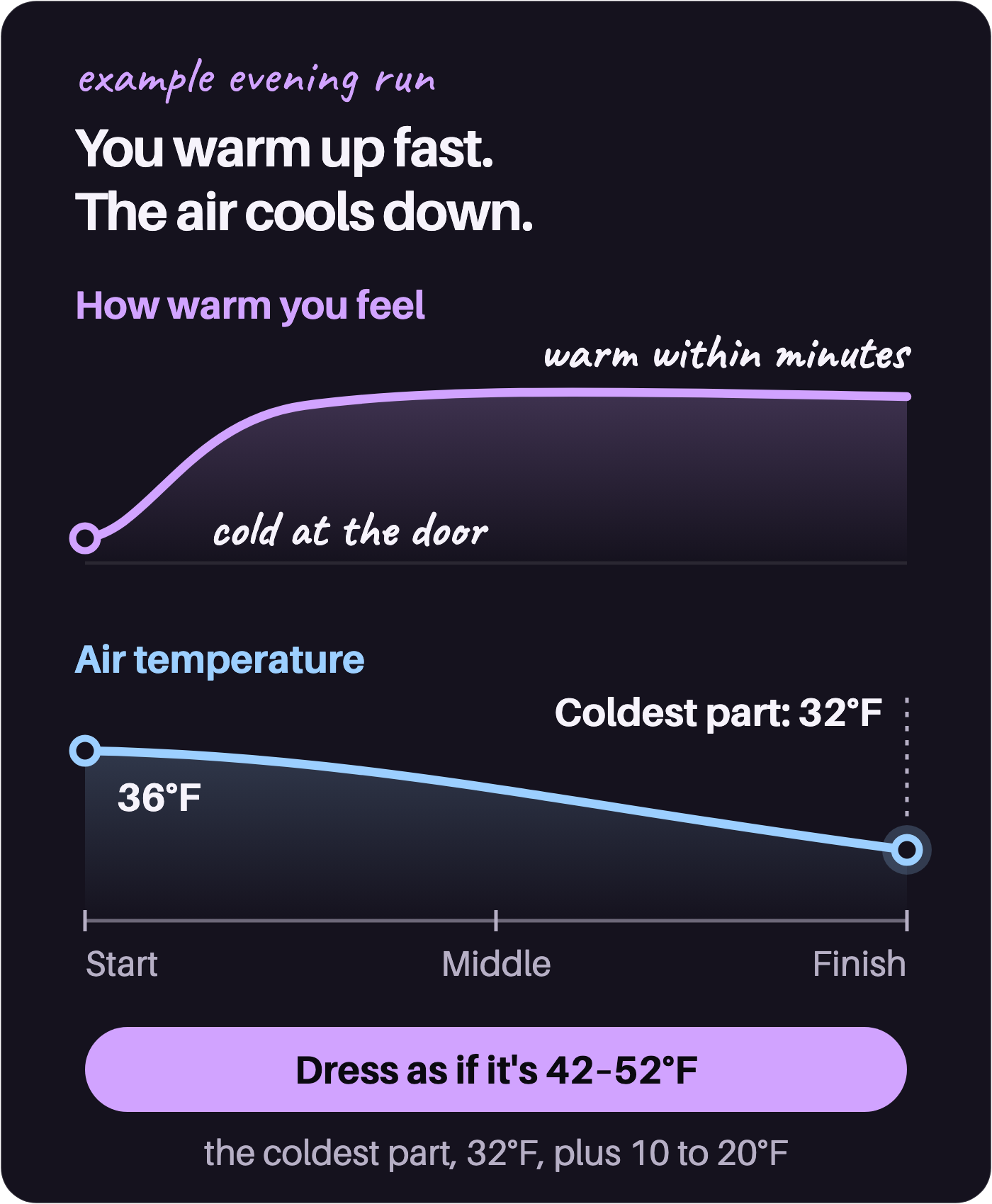
The chill you feel at the door only lasts until you get moving. Running in cold weather still makes heat quickly, so an outfit that feels right while you stand on the porch is too warm once you're running.
That heat keeps building through the first part of the run, and sweat builds with it. That's why the outfit that felt fine a few minutes in feels too warm by the middle.
Sweat is the real problem. Damp clothes feel cold later, when you slow down, walk, or turn into the wind. The fix is layers you can take off as soon as you start to sweat and put back on when you need them.[2]
Dress for the Coldest Part of the Run, Not the Doorstep
Before you head out, think about where the run will feel coldest: a finish after the temperature drops, the way back into the wind, or a long stretch in the shade.
Start from the temperature you expect there, and dress as if it were about 10 to 20°F warmer than that.[1] Wind makes the same temperature feel colder, so on a breezy day start from the feels-like temperature.[3]
If you take walk breaks, you'll warm up on the running parts and cool off on each walk.[2] Dress closer to 10°F warmer, the low end of that range, so you wear a little more. Zip up or pull your gloves back on while you walk.
Our first run after years off guide explains the walk-run approach. For which clothes fit which temperature, see our guide to what to wear running today.
Let RunOutNow Check the Whole Run
RunOutNow plans your outfit for the whole time you'll be outside:
- The coldest part: Pick a 1-, 2-, or 3-hour window; the outfit covers its coldest part, so a finish that cools toward sunset is covered.
- What changes as you go: If the forecast is cooling, the card says "Dress for the cooler finish"; if it's warming, "You can take off extra layers."
- Walk breaks: Choose Easy effort; easier runs get warmer layers.
- A cold start: After the run, rate the outfit and mark "Only at the start of the run." If that happens again, the app suggests something light for the start that you can take off.
Current weather and outfit advice work without an account.
What to Adjust Once You Warm Up
When you start to feel warm, work down this list:
- Pull off your gloves and put them in a pocket.
- Push your hat or ear band up, or take it off.
- Unzip your jacket or top layer.
- Push up your sleeves.
- Take off a light layer and tie it around your waist.
If you walk the rest of the way, turn into the wind, or the sun drops, work back up the list, starting with the last thing you took off. On a short walk break, zipping up or putting your gloves back on is enough.
Choose a top layer light enough that you don't mind carrying it. Layers let you strip down later in the run as your body temperature rises.[4]
Ice and Darkness
On icy patches, shorten your step. Winter days are also short: if you can choose, a midday run gets the warmest, brightest hours, and our guide to the best time to run today helps you compare them.
How Cold Is Too Cold to Run?
Run in any rain, wind, or cold unless the temperature is below −13°F (−25°C), the wind is strong enough to knock you off your feet, or the rain has left no solid ground to run on.
In deep cold, dress for it and stay near help rather than heading far into a forest or another deserted place.
RunOutNow does not guarantee safety. Check the tips in the app before you go out, then use your own judgment and common sense. The app's own timed warnings, such as thunderstorms or freezing rain, are among those tips.
Common Questions
Is it better to feel cold or warm when I start?
A little cold. If you feel warm standing at the door, you'll likely be too warm once you're running.
Should I warm up before a cold run?
It helps. A few minutes of easy movement indoors makes the first cold minutes easier and takes away the urge to overdress.
Do I need special gear for running in the cold?
No. Everyday gloves and a hat work. Add pieces only when you find a real gap; our outfit guide shows what to add as it gets colder.
Why does running feel harder in the cold?
The first minutes often feel stiff and hard until you warm up. Start easy, walk when you want to, and it usually eases once you're warm.
Your next step: On your next cold run, start a little cold, bring one layer you can take off, and check what RunOutNow suggests for the coldest part of your window.